
- News
- City News
- chennai News
- The ‘swami’ who was a solo sensation
Trending
This story is from July 4, 2023
The ‘swami’ who was a solo sensation
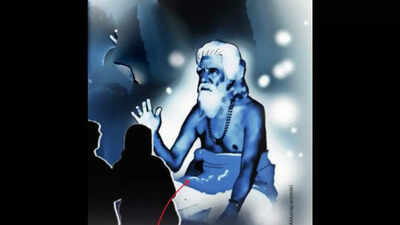
During one of his popular musical expositions on the Tamil hymns of the Saiva canon, Dharmapuram Swaminathan remarked in passing, ‘Odhuvaarnaa thallupadi thaane’, meaning that odhuvars, the singers of hymns in Siva temples, were considered to be of inconsequential status and enjoyed little influence. Ironically, he was an odhuvar but strode the field like a colossus, being a charismatic singer who not only cast a spell on millions with his stirring music and resounding voice, but also commanded great respect.
Swaminathan was however conservative in attire (he never wore a shirt) and never boarded a flight in his life, despite entreaties for concerts from abroad.
The lean, dark-complexioned Thevaram exponent came to be regarded with reverence because of his simple style of living and passion for sacred song, with his silver mane and flowing beard accentuating the halo of sanctity.

Though he was seen by some as being less of a team man and more of an individualist who adopted unconventional means to popularise the hymns of the Saiva canon, his resolute dedication to his calling and munificent services to temples, sometimes by rebuilding dilapidated ones, gave him a larger-than-life stature. The extent of the admiration and esteem that he elicited can be gauged from the fact that an ardent follower, Durai Arumugam, donated a pair of golden cymbals (portraalam) for his use. Later, his followers got a bronze likeness of his made for adoration.
The Saiva temple’s tryst with sacred song started with saintly minstrels like Gnanasambandar and Tirunavukkarasar in the seventh century and Sundarar in the eighth century, who wandered from temple to temple paying homage to the deities in musical Tamil. Within a few centuries, the hymns had been lost and regained, and together with other works, were eventually laid out in 12 sections as the ‘Panniru Thirumurai’. Though the Thevaram hymns are said to have been sung in temples from the eighthcentury, kings like Rajaraja of the 10th century brought the practice into greater vogue. The latter appointed 48 odhuvars (‘pidaarars’) to sing to the deity in the Brihadeeswara temple that he built at Thanjavur.
Swaminathan came to this tradition somewhat unwillingly, and under poignant family conditions after his father’s disillusionment with life consequent to the passing of his eldest son. At the age of 12, he was sent to serve the Dharmapuram Mutt’s 24th pontiff as a personal attendant. He was then Rajagopal, or Gopal, which Vaishnavite name was later changed to Swaminathan in keeping with the Mutt’s Saivite ethos.
Swaminathan was a strapping young boy brimming with the zest for life and buoyedby the strains of the music of the great icons of his time. The songs of the likes of S V Subbaiah Bhagavathar (Kaama Sundarangi), S G Kittappa (Kami Sathyabhama) and Dandapani Desigar (Oru Mada Maathum in the film Pattinathar) were always on his lips. But it was M K Thyagaraja Bhagavathar with his ‘Gnaanakkan Ondru’ song in the hit film ‘Chinthamani’ (1937), who mesmerised him. For years, Swaminathan would wax eloquent about the magic of Bhagavathar’s voice and assert that it was only because of him that he became a singer.
The turning point in Swaminathan’s life came on July 2, 1942, when Arulnandhi Thambiran, a monk of the Dharmapuram Mutt, succeeded in convincing him to take Thevaram lessons. “You have a golden voice. You should wear this gold on your crown. That is what you will be doing when you sing Thevaram songs,” was his counsel to the young Swaminathan.
By 1951, Swaminathan had been fully trained in the Thevaram idiom and in classical music, and subsequently served the Mutt as a Thevaram teacher and singer for 16 years, before he became an independent odhuvar in 1968. From thereon began his magnificent odyssey of crisscrossing the Tamil country (he visited Sri Lanka five times), taking the strains of sacred Tamil song to Saivites; in this endeavour, no village was too small, no marriage too humble. Odhuvars generally sang in groups, there would be at least two. Swaminathan sang solo. Odhuvars never spoke while singing. Swaminathan tagged his ideas to the hymns.
As the decades went by, he cut down upon musical complexities to take the Thevaram messages more forcefully to more people.
“Only somebody who commanded authority and admiration like him could have done this,” says Balachandra Odhuvar, a scholar and teacher who knew him intimately in his last years. Not that Swaminathan met only with approbation. Musicologist B M Sundaram recalls hearing him sing the canonical hymns in ragas Kanada and Desh, which are alien to the Tamil Pann tradition. When he asked the singer, he got the reply that this is what people liked to hear.
Swaminathan was however conservative in attire (he never wore a shirt) and never boarded a flight in his life, despite entreaties for concerts from abroad. All his life, he lived in villages and swore by the purity of well water. Thankfully, he loved the modern recording machine, and became the most recorded Thevaram singer with more than 800 albums to his credit. As sound engineer Raju who recorded many of these programmes said, “He was not only a good singer and musician but also a good human being. ”
(The author is an author and historian of Tamil cinema)
End of Article
FOLLOW US ON SOCIAL MEDIA










Photostories

Hot Picks
TOP TRENDING
Popular Categories
Hot on the Web
Top Trends
IND vs BAN Live ScoreIND vs SL Live ScoreNew UPI Transaction LimitHurricane MiltonRBI Monetary Policy MeetingWorld First Top 10 TrillionairesStock Market TodayKerala Lottery ResultElection Results 2024Tom BradyIsrael Hezbollah WarSuryakumar YadavManagement Colleges of IndiaTop Medical Colleges of IndiaTop Engineering Colleges of IndiaTop Pharmacy Colleges of IndiaLive Cricket Score
Trending Topics
Diwali WishesBigg Boss Tamil 8 Contestants ListBhool Bhulaiyaa 3 TrailerNavratri Colours 2024Sanjay Leela BhansaliDurga Puja 2024Bigg Boss 18 House PhotoDevara CollectionBigg Boss 18Deepika PadukoneShailesh LodhaDevaraColdplayNational Film Awards 2024Swatantrya Veer SavarkarColdplay India tour 2025Watch NFL Live StreamDress To ImpressCall Of Duty Black Ops 6Wordle Answer
Living and entertainment
Latest News
CATS YouTube codes for October 9, 2024: Earn 500 CATS and know how to redeem the codesHurricane Milton: Why Tampa area is so vulnerable to stormsBeard Trimmer with Titanium Blades: Style Your Beard to Perfection with Unmatched SharpnessTHE World University Rankings 2025: IISc Leads India , Check the List of Top 10 Indian Institutes HereAre HDFC Bank, Axis, Kotak a value buy or value trap for investors?Triptii Dimri on emotional struggles following criticism for 'Animal’: Side effect of being in a mainstream filmDid the threat of ‘first Hindu CM’ help NC-Congress win J&K?Ethel Kennedy, widow of Senator Robert F Kennedy Sr suffers stroke in sleep, hospitalisedRanbir Kapoor's UNSEEN BTS pic from 'Shamshera' goes viralSum 41’s Deryck Whibley accuses former manager of sexual abuse in new memoirMudassar Aziz: A filmmaker needs to carefully study while pegging a film around the idea of stardomHyundai aims to raise up to $3.3 billion in record India IPOPrabhas starrer 'Kalki 2898 AD' gears up for its release in JapanMan declares income of Rs 9.6k, pays tax on Rs 43.5L after US earnings addedPatanjali Foods gets CCI nod for Rs 1,100-crore buyout of parent's home & personal care businessWho is Aniruddhacharya Maharaj? Know more about Pookie Baba’s life journey and net worthWill Allu Arjun be able to beat Prabhas in North America with Pushpa 2?OnePlus 12 is available for Rs 35,314 only on Amazon; check exchange deal and bank offers
Copyright © 2024 Bennett, Coleman & Co. Ltd. All rights reserved. For reprint rights: Times Syndication Service